
August 16, 2017, by Robert Brett Dunham, Death Penalty Information Center
About half of all death penalty states include the murder of a child as an aggravating circumstance that can subject a defendant to the death penalty. As of January 2022, fourteen states authorized the death penalty for the murder of a child victim, and five states that later abolished the death penalty also had a child-victim aggravating circumstance.
The most common of the age-of-victim requirements by far—used by nine current or former death penalty states—is that the victim must be under age 12. The next most common age, used by four current or former death penalty states, is that the victim be under age 14. Two states require that the victim be younger than age 13, and one requires that the victim be younger than age 10. Only three states authorize capital prosecution based upon the victim being 14 years old or older…
The Risks Inherent in Child-Victim Aggravating Circumstances
A 2017 study of more than 1500 cases in which convicted prisoners were later exonerated found a direct relationship between the perceived seriousness of the crime and miscarriages of justice: “the ‘worst of the worst crimes,’” the University of Denver researchers said, ”produce the ‘worst of the worst evidence.’” The very same factors that make child killings so horrifying also make them much more susceptible to wrongful conviction. The highly emotional and highly sensational nature of these cases increases the stakes and, for the prosecutor, the rewards of a conviction and creates both conscious and unconscious incentives for misconduct. The same is true for expert witnesses, and it should come as no surprise that a disproportionate number of junk-science exonerations and wrongful convictions involve the deaths of children…
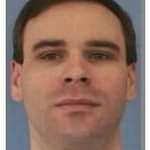
Jeffrey Havard (pictured) was convicted and sentenced to death in Mississippi in 2002 for the alleged murder of his girlfriend’s 6-month-old daughter. The key evidence against him came from Dr. Steven Hayne, a medical examiner whose practices and diagnoses have been harshly criticized by experts in forensic pathology. Hayne testified at Havard’s trial that he found symptoms of “shaken baby syndrome” and sexual abuse on the infant. The sexual abuse finding — which Hayne later disavowed — allowed prosecutors to seek the death penalty in the case.
Dr. Hayne acknowledged having performed as many as 1,700 autopsies in a year—far more than the number recommended by experts—in addition to having his own pathology practice. According to Dr. David Fowler, chief medical examiner in Maryland and a former chairman of the standards committee for the National Association of Medical Examiners, that number is “beyond defensible.” Hayne’s autopsy in Havard’s case has been reviewed and discredited by other expert pathologists. Other cases in which he had provided pivotal prosecution testimony have been overturned through DNA testing. Investigations into Hayne’s credentials indicate he had never been certified in forensic pathology by the American Board of Pathology. He had taken the exam in 1980, but failed it.
In April 2015, the Mississippi Supreme Court unanimously ruled that Havard was entitled to an evidentiary hearing to present new scientific evidence on the unreliability of shaken baby diagnoses. At the time, Dr. Hayne admitted to The Jackson Clarion-Ledger newspaper that there was “growing evidence” that his shaken baby diagnosis was “probably not correct” and that he “didn’t see any evidence of sexual assault.” In that evidentiary hearing in August 2017, Dr. Hayne backed off his shaken baby diagnosis, but still insisted the death was homicide. The court did not permit testimony on his recantation of his sexual abuse diagnosis. Defense expert, Dr. Michael Baden, testified that “shaking had nothing to do with the death. All the injuries,” he said, “were entirely consistent with blunt force impact, consistent within the manner in which Mr. Havard on day one said that the baby had fallen.”
The evidentiary hearing concluded in August 2017. More than a year later, in September 2018, Adams County Circuit Judge Forrest Johnson overturned Havard’s death sentence but upheld his conviction. Forrest wrote that Hayne’s recantation of his shaken-baby diagnosis was “not sufficient to undermine this court’s confidence in the conviction,” but “there is a cautious disturbance in confidence of the sentence of death, even if slight.” Prosecutors subsequently dropped the death penalty against Havard, who continues to appeal his conviction.


 Justice for Jeffrey Havard