DR. JAMES LAURIDSON
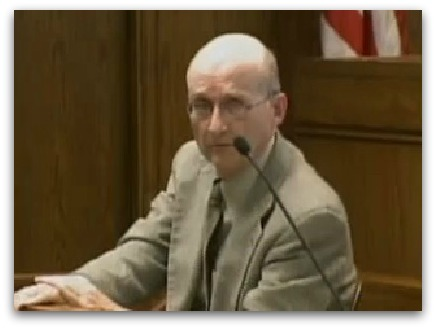
Following Jeffrey Havard’s conviction, Mississippi’s post-conviction relief office enlisted the expertise of former Alabama state medical examiner Dr. James Lauridson to review the autopsy findings of Dr. Steven Hayne.
Dr. Lauridson’s assessment concluded that the evidence failed to substantiate any form of sexual assault. Notably, there were no indications of tears or lacerations in Chloe’s anus, and he highlighted that it is not out of the ordinary for dilation to occur naturally. Additionally, Lauridson noted the absence of Havard’s DNA on or inside Chloe Madison Britt. He further suggested that a thermometer inserted into Chloe’s anus at the emergency room could have caused the minor bruise. Dr. Lauridson’s report shreds the prosecution’s case.
In his May 10, 2007, report, Dr. Lauridson states:
Neither the autopsy examination or photographs confirm a tear of the anal sphincter. The autopsy report and Dr. Hayne’s testimony state that the injury to the rectum was a contusion not a tear.
In his testimony, Dr. Hayne states that rigor mortis caused contracture of the muscles after death. That statement is erroneous, and is contrary to the well-known effects of rigor mortis. Rigor mortis causes rigidity of muscles, but does not cause muscles to contract. Dr. Hayne said that [he] believes that the anal sphincter contracted after death hiding a tear in the anus. He gives this as a reason why he did not see a tear in the anus at the autopsy. Furthermore, the absence of postmortem contraction of the anus is confirmed by examining the photographs of the anus taken in the emergency room and photographs of the anus taken during autopsy. Although measuring scales are not included in either of these photographs, it is apparent that the amount of anal relaxation in the emergency room and at the time of autopsy is approximately equal. Additionally, photographs of the anus taken in the emergency room show soft stool in the perianal region. There is no blood visible in the anus or the perianal region, and there is no blood in the surrounding stool. Likewise no free blood from the anus was described in the autopsy report or in Dr. Hayne’s testimony at trial.
Thus there is no objective evidence for bleeding from the anus or tear of the anal tissues in the autopsy report or in any of the photographs taken of the anus.
Experienced medical examiners commonly encounter dilated anal sphincters during postmortem examinations. Experience as well as the medical literature recognizes that this finding does not imply anal sexual abuse. Studies of this phenomenon, in fact have shown that children who have died of brain injuries have an increased likelihood of having a dilated anus.
In children, the inner mucosa (lining) of the rectum is sometimes visible after death and the pink or red color of the lining of the rectum may be mistaken for trauma. Although some of the medical doctors examing the child testified that there was blood coming from the rectum this was not confirmed either photographically or at the time of autopsy. It is suggested that these physicians mistook the lining of the rectum for trauma…
The lining of the anus and rectum is a delicate tissue and can easily be injured, producing a contusion if a foreign object is inserted. It should be noted that a foreign object was inserted during the resuscitation when the rectal temperature was measured in the emergency room.
The conclusions that Chloe Britt suffered sexual abuse are not supported by objective evidence and are wrong.
Postmortem anal dilation in infants I s a commonly recognized artifact that does not signify sexual abuse. In this case other factors also contributed to the anal dilation: 1) large amounts of gas introduced into the gastrointestinal tract during resuscitation.; and 2) generalized muscle flaccidity. No hemorrhage from the anus was documented, and the autopsy failed to reveal tearing of the anal or rectal tissues…
In a subsequent report, Dr. Lauridson stated the following:
On June 30, 2007 nine histology slides from the autopsy of Chloe Britt AME 2-M3-02, were examined. These were examined specifically to evaluate tissue from the anal, perianal and colonic regions for the presence of trauma, including contusion and a laceration of the epithelium and mucosa.
There is no histologic evidence for contusion, or laceration of the surfaces of the anal perianal and colonic tissues. Additionally there is no evidence of blood in the lumen of the anus or colon. No evidence of sperm is present.
These findings further strengthen the conclusions of my report, dated May 10, 2007.
View Dr. Lauridson’s reports in their entirety:
View Dr. Lauridson’s professional biography:
DR. MICHAEL BADEN
Dr. Michael Baden is a physician and board-certified forensic pathologist. Dr. Baden is the former Chief Medical Examiner of New York City and is currently the chief forensic pathologist for the New York State Police. Dr. Baden is world-renowned for his work in this field.
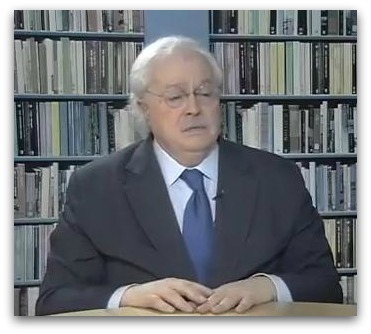
At The Clarion-Ledger‘s request, Dr. Baden agreed to review the evidence in the Jeffrey Havard case. Dr. Baden’s findings decisively refute the prosecution’s case against Havard. Havard’s conviction was secured on the basis that a sexual assault occurred, which then led to murder. The cause of death was never determined in court, but Dr. Steven Hayne listed the cause of death as consistent with shaken baby syndrome in his autopsy report.
According to Dr. Baden, there is absolutely no proof that any sexual assault ever took place and no scientific evidence to support a diagnosis of shaken baby syndrome.
The ER staff immediately jumped to conclusions when examining Chloe on the night of her death. The staff erroneously determined that a sexual assault had taken place based on the observation that Chloe’s anus was dilated. According to Dr. Baden, it is common for the anus to dilate in a coma or after death.
According to Dr. Baden, the injuries detailed in the autopsy were consistent with injuries caused by head trauma from Chloe being accidentally dropped and hitting her head on the toilet, just as Havard had described.
Dr. Baden concluded that Chloe “was not sexually assaulted and that she died of injuries consistent with an accidental drop.”
Dr. Baden also disagreed with the finding of shaken baby syndrome, stating “There is no autopsy or scientific evidence to support a diagnosis that Chloe died of shaken baby syndrome.”
In his report, Dr. Baden states:
It is my opinion, to a reasonable degree of medical certainty, based on my education, training and 50 years’ experience as a forensic pathologist and medical examiner, that Chloe Britt’s clinical, medical and autopsy findings, including her head bruises, are entirely consistent with having resulted from a short accidental fall and are not consistent with Shaken Baby Syndrome.
It is further my opinion that there is absolutely no evidence – no circumstantial, medical, forensic, or autopsy evidence – that Chloe was sexually abused.
Dr. Baden has also stated that he will testify on Havard’s behalf if he is granted a new trial.
View Dr. Baden’s declarations (March 13, 2013, and November 23, 2013) and curriculum vitae in their entirety:
DR. JANICE OPHOVEN
Dr. Janice Ophoven’s expert witness report concludes that there is no evidence of sexual abuse or shaking in the case of Jeffrey Havard. Autopsy findings and photographs reveal a normal rectal area for a deceased infant, contradicting claims made by hospital personnel who lacked expertise in post-mortem infant examinations. The report highlights that misinterpretations by emergency room staff, influenced by their inexperience, led to inflammatory and erroneous conclusions about sexual assault. Additionally, the Dr. Ophoven notes that the child was ill at the time of death and had been taking medication, which could explain some findings misinterpreted as abuse.
Her report stresses the importance of objective medical documentation and criticizes the reliance on unsupported claims of sexual violence and shaken baby syndrome, which were prevalent at the time of the trial. Ultimately, she argues that the misinterpretation of medical evidence severely compromised the fairness of the trial and calls for a thorough review of the case to rectify what it describes as a serious miscarriage of justice.
Key points from Dr. Ophoven’s affidavit include:
There is no evidence of sexual abuse in the autopsy findings or photograph. The rectal area in the photographs is within the range of normal in a deceased infant. These findings were misinterpreted by hospital personnel who did not have experience or expertise in post-mortem changes in infants…
The fact that Mr. Havard did not have an expert to help his attorney understand the medical issues virtually guaranteed his conviction, irrespective of guilt or innocence, particularly given the incorrect and inflammatory information provided by the emergency room personnel on the anal findings…
There are several confounding factors in the child’s death. The lab reports and slides (reactive lymphoid hyperplasia) confirm the child was ill at the time of death, consistent with her history, and that she was taking an antibiotic that included trimethoprim, whose side effects include unusual bruising or bleeding. Such factors do not explain the death but may explain some of the findings that were misinterpreted as abuse. The unusual swelling observed in the hospital may have distorted the autopsy findings…
As even a brief records review makes clear, the evidence in this case was inflammatory and internally contradictory. It also dealt with highly controversial issues that have been the subject of major changes in the literature over the past decade…
The photographs of the anus show a classic presentation of the rectal area of a dead baby. Over the years, the findings of postmortem relaxation of the anus have been misinterpreted on multiple occasions as traumatic or penetrating injury by emergency room personnel or other clinicians…
…This case provides an excellent example of the critical need for objective documentation.
The hospital staff based the diagnosis of sexual assault on a dilated anus and an anal tear that was not present at autopsy. The autopsy photograph (which is not of optimal quality but is sufficient for this purpose) confirms there was no tear. I agree with Dr. Hayne that it is impossible for a tear to have healed in the very short time (less than an hour) between the hospital examination and death.
The hospital staff testified that the baby was oozing stool from the rectum during the period in which they thought they saw the anal tear. It is difficult to see how they could have seen a tear under these circumstances. It is of further concern that numerous medical staff and at least one police officer reported seeing these findings. For this to occur, someone must have been holding the child’s legs, cleaning the child, etc., introducing the possibility of artifact in a dead and/or dying child.
The autopsy is the gold standard in determining the existence of tears or lacerations, and I do not understand why the hospital staff was permitted to testify to something that did not exist. Nor do I understand why Dr. Hayne stated in his deposition that he would defer to the hospital staff since this would defeat the purpose of an autopsy, which is to make objective medical findings. In this case, the objective medical findings, including the photographs, establish that there was no tear yet the hospital staff was permitted to testify that it existed, a physiological impossibility. This lack of objectivity casts doubt on the reliability of other clinical observations made by the hospital staff.
Dr. Hayne made clear that he was well advised of the allegations of sexual assault before the autopsy and that he and his staff looked carefully for any possible supporting evidence. The only evidence he was able to identify was a small contusion in the anal area. This is a nonspecific finding. Since this contusion was not seen by the hospital staff, it likely results venous congestion, which is typical in dead infants; pressure in this area as numerous hospital staff and police officers viewed the anal findings; or a coagulopathy (bleeding/clotting disorder) caused by the child’s critical condition and medications. I agree with Dr. Hayne that this finding does not indicate sexual assault and that no other evidence of sexual assault (sexual assault kit, widespread bruising, etc.) is present…
In addition to misinterpretation of the medical evidence, the accusation of sexual violence in the absence of verification influences the investigation and distorts the entire process, beginning with the hospital records and continuing through trial and subsequent court proceedings. Based on my 30 years of experience in this field, it is my opinion that any jury would have been improperly and irrevocably prejudiced by the claims of the emergency personnel that the medical findings established sexual assault, irrespective of the fact that the findings did not exist at autopsy. If such evidence was presented at trial, it is not possible that Mr. Havard could have received a fair trial. This was exacerbated by the failure of the Court to all the attorneys to retain a medical expert to advise them and/or testify at trial.
Dr. Ophoven’s report continues, discussing shaken baby syndrome:
For the past decade, the theoretical underpinnings of shaken baby syndrome (SBS) have been severely criticized, and it is now recognized that there are many natural causes for subdural and retinal hemorrhages. It is also now understood that short falls can be fatal, albeit rarely, and that the forces of impact far exceed the forces of shaking. As reflected in the testimony of Dr. Hayne and the treating physicians, however, this case was diagnosed and tried in 2001-2002, essentially at the height of the SBS hypothesis…
As a result of the changes in literature, it is now rare to hear the type of testimony given in this case, which suggested subdural hemorrhage and retinal hemorrhage indicate forces comparable to those in motor vehicle accidents or falls from great heights. There is no medical or scientific support for this claim.
Despite the fact that this case was diagnosed at the peak of the popularity of SBS, Dr. Hayne did not conclude in his report or testimony that the death was “due to” shaking or that the manner of death was homicide but rather stated that the findings were “consistent with” shaken baby syndrome and homicide. This wording is revealing. Since in medicine most findings are “consistent with” a wide array of diagnoses, this wording indicates that he did not reach a clear or definitive diagnosis that would support a finding of shaking or homicide beyond a reasonable doubt or even by a preponderance of the evidence. Such distinctions are unlikely to be noted by a jury unless the defense attorney understands these nuances, most likely through consultation with a medical expert.
Perhaps the most notable aspect of this case is that the evidence of impact (facial bruising combined with a described impact) was ignored in favor of hypotheses (shaking and sexual assault) for which there was no medical or evidentiary support. These preliminary conclusions by hospital personnel prejudiced the subsequent investigation, which attempted to find evidence to support these claims rather than conducting an open-ended investigation. Even in this context, the evidence obtained was insufficient to reach any definitive conclusions on sexual assault or the cause or manner of death.
In her report’s conclusion, Dr. Ophoven states:
There is no evidence to support a finding of sexual assault in this case. Instead, the misinterpretation of the anal findings by emergency room personnel who were unfamiliar with postmortem findings in infants precluded the possibility of a fair trial and led to a miscarriage of justice.
There was no evidence to support a finding of shaking in this case; instead, the evidence is of impact. There may also have been contributing factors, including illness. A complete review of the autopsy slides and photographs is required in order to reach more definitive conclusions.
I am very concerned that this case represents a serious miscarriage of justice, particularly given the capital nature of the case, and an urgent remedy and review of the evidence is required. I would personally agree to participate in such an investigation on a pro bono basis until a proper analysis, including review of the autopsy slides and complete set of autopsy photographs, has been completed.
View Dr. Ophoven’s entire affidavit and curriculum vitae:
DR. CHRIS VAN EE
Dr. Chris Van Ee’s expert witness report on Jeffrey Havard’s wrongful conviction emphasizes the need for further investigation into the reported accidental fall described by the child’s caretaker. It argues that short falls can indeed cause head injuries similar to those observed in the autopsy, suggesting that the injuries cannot solely be attributed to abusive shaking. The report highlights that biomechanical data indicates that the forces generated by falls, even from as little as one foot, can exceed those produced by shaking.
Thus, dismissing the Havard’s account without thorough examination undermines the scientific understanding of the potential causes of the child’s injuries, reinforcing the argument for a reconsideration of the evidence in Havard’s case.
In his report, Dr. Van Ee concludes:
[I]t is my opinion that the reported accidental fall scenario provided to me as described by the caretaker should not be dismissed without further investigation. Short falls do have the potential to result in impacts to the head consistent with the head injury findings described at autopsy.
Based on available biomechanical data, abusive shaking produces angular accelerations less than that produced in falls of only 1 foot. To attribute the injuries of this child to shaking and dismissing the reported history of the accidental fall is not supported by the current science…
View Dr. Van Ee’s entire Affidavit and curriculum vitae:
DR. GEORGE NICHOLS
Dr. George Nichols’ expert witness report on Jeffrey Havard’s wrongful conviction asserts that Chloe Britt’s death is more consistent with a short fall rather than abusive shaking. At the time of Havard’s trial, many medical experts, influenced by prevailing beliefs, supported the State’s assertion of Shaken Baby/Impact Syndrome based on Chloe’s subdural hematomas and retinal hemorrhages. However, Nichols points out that recent medical literature disputes the notion that these symptoms definitively indicate abuse, as the classic triad of Shaken Baby Syndrome was not fully established in this case. He highlights that alternative explanations for such injuries, including various medical conditions and simple impact trauma, are now recognized within the medical community.
Nichols also critiques earlier claims that Chloe’s injuries required significant force, noting that falls can lead to serious injuries regardless of distance. He emphasizes that ongoing developments in the legal and medical fields have prompted a reassessment of diagnoses of intentional abuse, suggesting that the conclusions drawn during Havard’s trial were not scientifically sound.
In his report, Dr. Nichols states:
In my opinion, Chloe Britt’s death is entirely consistent with a short fall, and not an abusive shaking. At the time of Mr. Havard’d trial, many medical experts in the world likely would have agreed with the State’s medical expert, Dr. Hayne, that Chloe’s death was caused by Shaken Baby/Impact Syndrome. This concurrence was likely despite the fact that Chloe displayed only two symptoms of shaken baby syndrome: retinal hemorrhaging and subdural hematoma. At the time, an infant who presented with subdural hematomas and retinal hemorrhages (without a history of motor vehicle accidents or a fall from an appreciable height) was likely to lead to the medical conclusion of intentional abuse–Shaken Baby/Impact Syndrome.
There has been considerable new medical literature since Mr. Havard’s trial that subdural hematomas and retinal hemorrhages are not necessarily indicative of abusive shaking; indeed, with only these two symptoms, the classic triad of Shaken Baby Syndrome is not fully established. Significant research papers published in prestigious medical journals in the United States and other western countries cast serious doubt on the conclusions that retinal hemorrhages and subdural hematomas in infants are specific signs of vigorous shaking, research which continues to the present day.
In the years since Mr. Havard’s trial, the medical community has begun to accept a number of alternative explanations that can account for deaths that would previously have been attributed to “shaken baby syndrome.” Some of these underlying medical conditions that can provide an alternative explanation for sudden death include: chronic subdural hematomas, hydrocephalus (an abnormally increased cavity deep inn the brain resulting in loss of brain substance and caused by blockage of the normal fluid circulation that occurs in and around the brain), coagulopathies (disorders of the blood clotting mechanism that result in that result in continuing or uncontrolled bleeding), thrombocytopenia (decrease in a normal cellular component of the blood that promotes sealing off of leaking blood vessels), various infections, and a number of inherited abnormalities of brain chemistry, as well as simple impact trauma.
At the time of Mr. Havard’s trial, many physicians, would probably have agreed that the injuries that caused Chloe’s death were inflicted within minutes of the time that Chloe was found close to death. I have changed my mind since Mr. Havard’s trial in 2002, and now I believe that it is certainly possible that Chloe could have appeared lucid after the injury…
At Mr. Havard’s trial, the State’s medical expert testified that Chloe’s injuries must have been caused by intentional force equivalent to the force of a motor vehicle accident or a fall from a significant height. It is now generally agreed by most forensic pathologists and biomechanical scientists and engineers that such comparisons are without scientific merit and should not be made. Falls are random events and it is now generally accepted that some long distance falls do not cause severe injury while other shorter distance falls may cause significant injury and death. It is further now understood that while most short distance falls do not lead to serious injuries, a subset of short distance falls result in skull fractures and lethal intracranial hemorrhage.
In the years since Mr. Havard’s trial, new developments have caused the legal and medical communities of England, Australia, Canada, and New Zealand, the courts in the states of Kentucky, Wisconsin, New Mexico, Arizona, and California, and even in the United States Supreme Court, to reconsider diagnoses of intentional abuse.
View Dr. Nichols’ affidavit and curriculum vitae:
DR. STEVEN HAYNE: CONTROVERSIAL, DISCREDITED MEDICAL EXAMINER
The prosecution argued that Chloe’s cause of death was Shaken Baby Syndrome (SBS), and the manner of death was a homicide. The prosecution’s case was built primarily on the testimony provided by Dr. Steven Hayne and the emergency room staff that was present on the night Chloe died.
On February 22, 2002, Hayne performed an autopsy on Chloe. Hayne concluded that his autopsy findings were consistent with Shaken Baby Syndrome.
Hayne stated:
It would be consistent with a person violently shaking a small child. Not an incidental movement of a child, but violently shaking the child back and forth to produce the types of injuries that are described as shaken baby syndrome, which is a syndrome known for at least forty-five years now. . . .We’re talking about very violent shaking.”
According to Hayne, at the time of Havard’s trial, the child’s symptoms pointed clearly to SBS.
Hayne also provided testimony that worked to boost the prosecution’s claims of sexual assault. He testified that the child had a one-inch-long contusion on her rectum, which, he explained, was “consistent with penetration of the rectum with an object.” Hayne misspoke at trial with regard to the measurement of the contusion. His autopsy report lists that contusion as measuring one centimeter. It is important to note that the autopsy report made no mention of a sexual assault.
Hayne clarifies his opinion—he does not support the prosecution’s claims
In June 2013, the Clarion-Ledger newspaper published an article addressing multiple cases, including Havard’s, where Dr. Steven Hayne had provided testimony. The relevant excerpt from the article reads as follows:
In April 2009, Hayne issued a statement indicating that there was insufficient evidence to establish the occurrence of a sexual assault. He remarked that the one-centimeter contusion discovered in the infant’s anus could have arisen from various sources. Ultimately, Hayne asserted that there was no concrete evidence linking Chloe’s death to any sexual activity.
At trial, [Hayne] testified the baby’s death was a homicide, consistent with shaken baby syndrome. But Hayne now disavows that conclusion, saying biochemical [sic] engineers believe shaking alone
This marked the initial indication that Hayne might be retracting from his trial testimony regarding Shaken Baby Syndrome. Subsequent to the release of the aforementioned article, Havard’s legal representation met with Hayne to inquire about his stance on the article and his views regarding Shaken Baby Syndrome in this case.
Hayne executed an affidavit in July 2013, reiterating that he formed no definitive evidence of sexual abuse based upon his findings in the Havard case. With respect to SBS, Hayne stated:
At trial, I testified that the cause of death of Chloe Britt was consistent with Shaken Baby Syndrome. Recent advances in the field of biomechanics demonstrate that shaking alone could not produce enough force to produce the injuries that caused the death of Chloe Britt. The current state of the art would classify those injuries as shaken baby syndrome with impact or blunt force trauma.
In another affidavit dated August 2014, Hayne clarified that he had explicitly informed prosecutors on multiple occasions before the trial that he could not support a finding of sexual abuse. This crucial information was withheld from the defense, constituting a Brady violation.
Hayne’s professional reputation has been tarnished by allegations of misconduct. In August 2008, Mississippi barred Hayne from conducting any more autopsies in the state. According to The Agitator, the Mississippi legislature passed a bill specifically aimed at preventing his future use by prosecutors in the state again.
It is encouraging to witness Hayne taking steps to rectify the errors he made in Havard’s case. Hopefully, his efforts will mark the initial step in a long process to help repair the extensive damage to numerous people he has caused throughout his career.
Learn more about Dr. Steven Hayne.


 Justice for Jeffrey Havard